Cupping vs. crowning
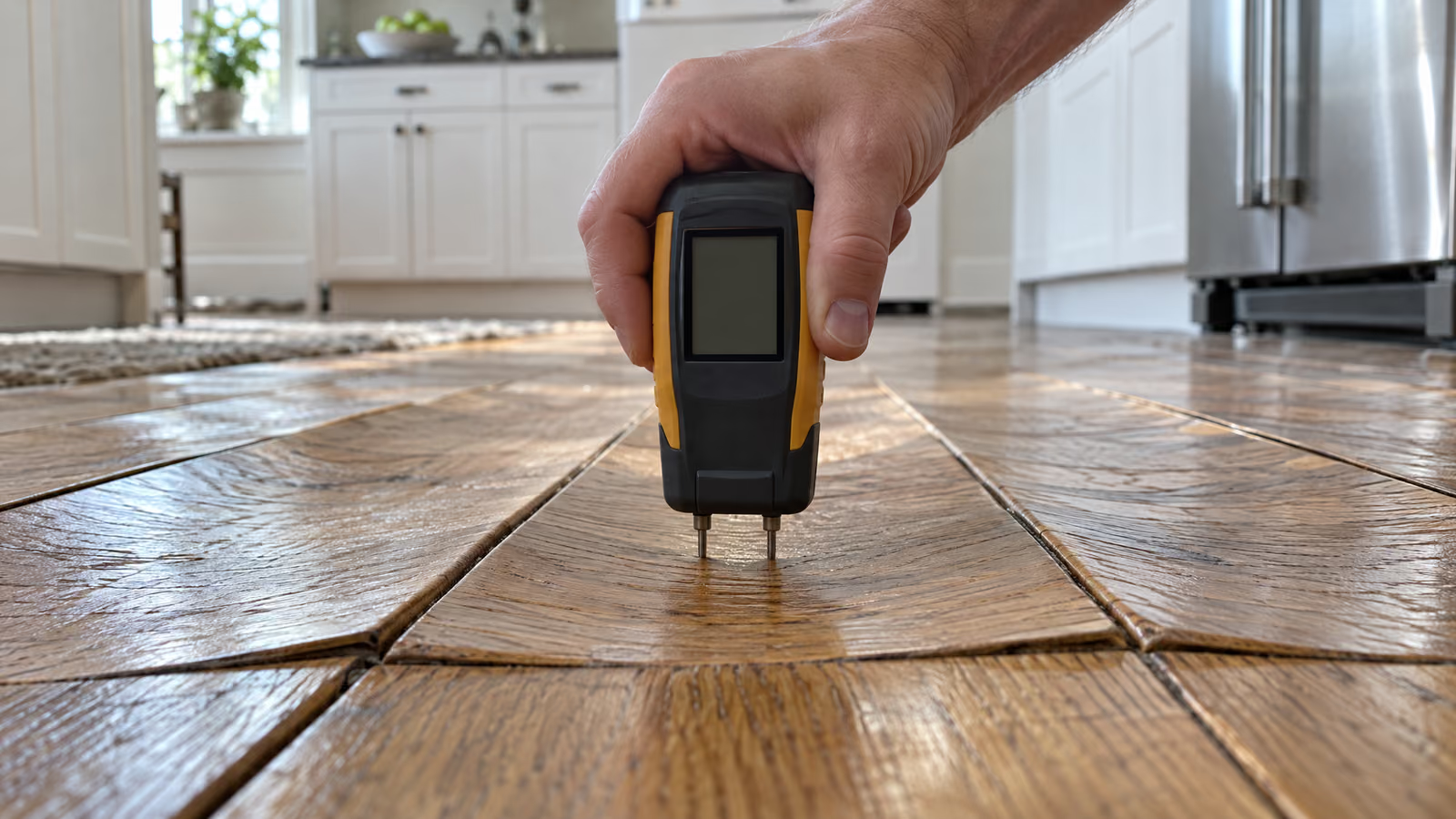
A cupped board has edges higher than its centre. A crowned board is the reverse: the centre is higher than the edges. Wagner Meters explains that both come from a moisture imbalance in the wood.
Crowning often shows up after a cupped floor is sanded flat too early. Once the wood dries, the centre of each board ends up higher, as National Wood Floor Consultants describes.
Step 1: find and stop the moisture
Cupping is a sign, not the cause. Look for the source first:
- A leak from a dishwasher, fridge line, sink or bathroom.
- A pet bowl, plant pot or spill that sat on the floor.
- Damp coming up from a crawl space or concrete slab below.
- High indoor humidity for weeks at a time.
Step 2: dry the floor and measure it
After the source is fixed, the floor needs time to dry. Fans and a dehumidifier help. Do not rush it with heat aimed right at the wood.
Wagner Meters advises taking moisture readings every few days, in both cupped and flat areas. When the readings match and stay steady, the boards have dried. Many cupped floors flatten a lot on their own during this time.
Step 3: never sand while the floor is still cupped
Wagner Meters puts it plainly: never sand a floor while it is still cupped. If the edges are sanded down while they are swollen, they shrink below the centre once they dry. The floor then crowns.
Once the moisture is stable, any cupping that is left can be sanded flat and refinished. See our hardwood floor refinishing service.
Repair, refinish or replace?
Boards that are black-stained, cracked, split or soft may need to be cut out and replaced. We weave in matching boards so the repair blends, then sand and finish the area. Our hardwood floor repairs page shows how.
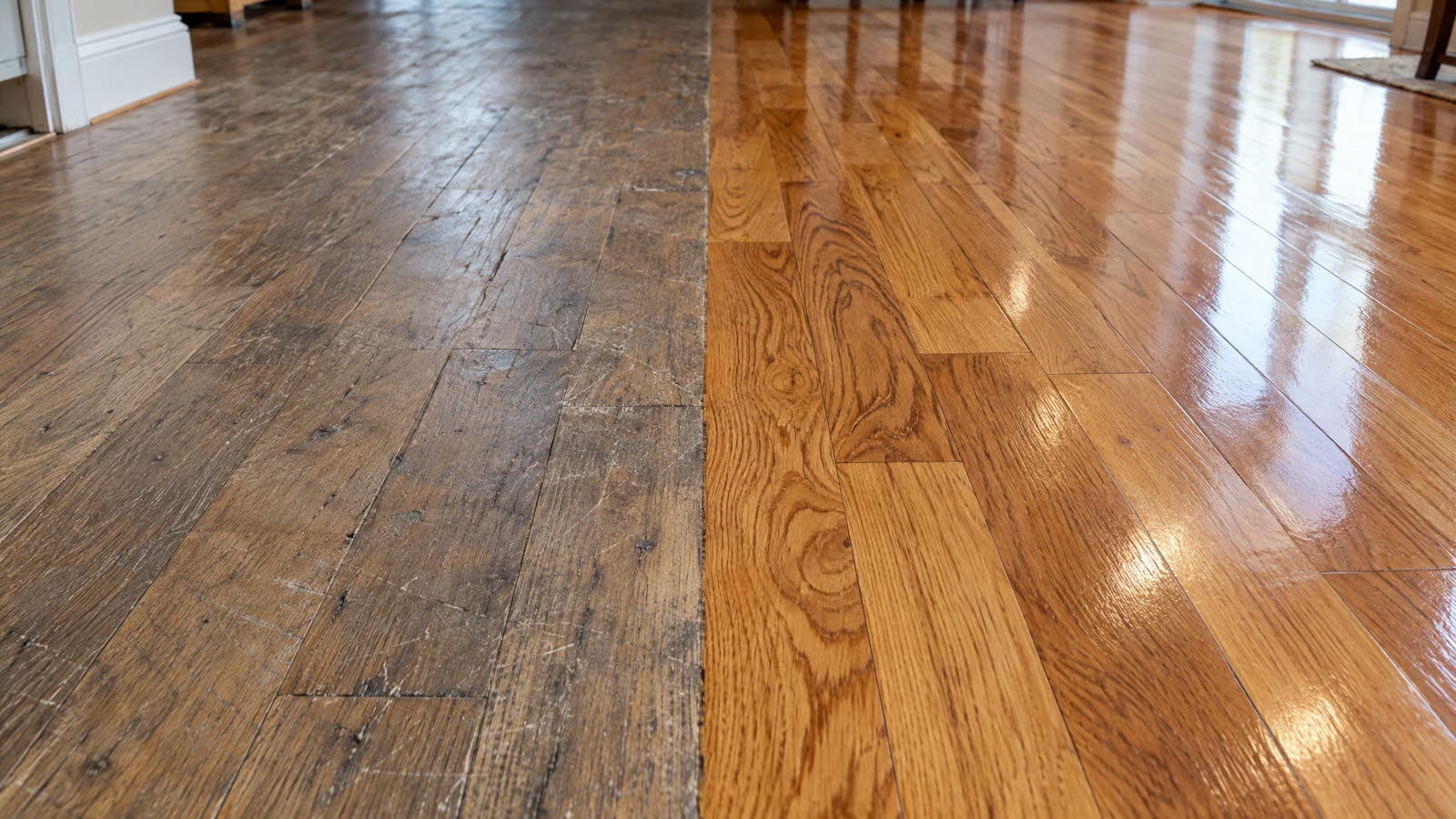
If most of the floor is sound, refinishing is usually the answer. If the finish is only dull after drying, a screen and recoat may be enough.
Keep it from happening again
The NWFA recommends keeping the home between 60 and 80°F with relative humidity of 30% to 50% all year. It notes that floors which gain moisture can cup. A simple humidity gauge helps you watch this through wet Lower Mainland winters.
We repair water-damaged floors in Vancouver, North Vancouver, Richmond, Burnaby, Delta, Surrey, Coquitlam and Langley. Book a free estimate once the leak is fixed.
Sources
Questions
Frequently asked questions
Will a cupped hardwood floor go back to normal?
Often it will flatten a lot once the moisture source is fixed and the wood dries. Some cupping may remain. That can be sanded flat, but only after moisture readings are stable.
How long should I wait before sanding a water-damaged floor?
There is no fixed number of days. Wait until moisture readings in the cupped and flat areas match and stay steady. Sanding before then risks crowning.
Can you replace only the damaged boards?
Yes, in many cases. Damaged boards are cut out and new matching boards are woven in. The area is then sanded and finished so it blends with the rest of the floor.