A typical refinishing timeline
Every floor is different, but most projects follow the same order:
- Prep: rooms are emptied, vents and doorways are covered, and loose boards are fixed.
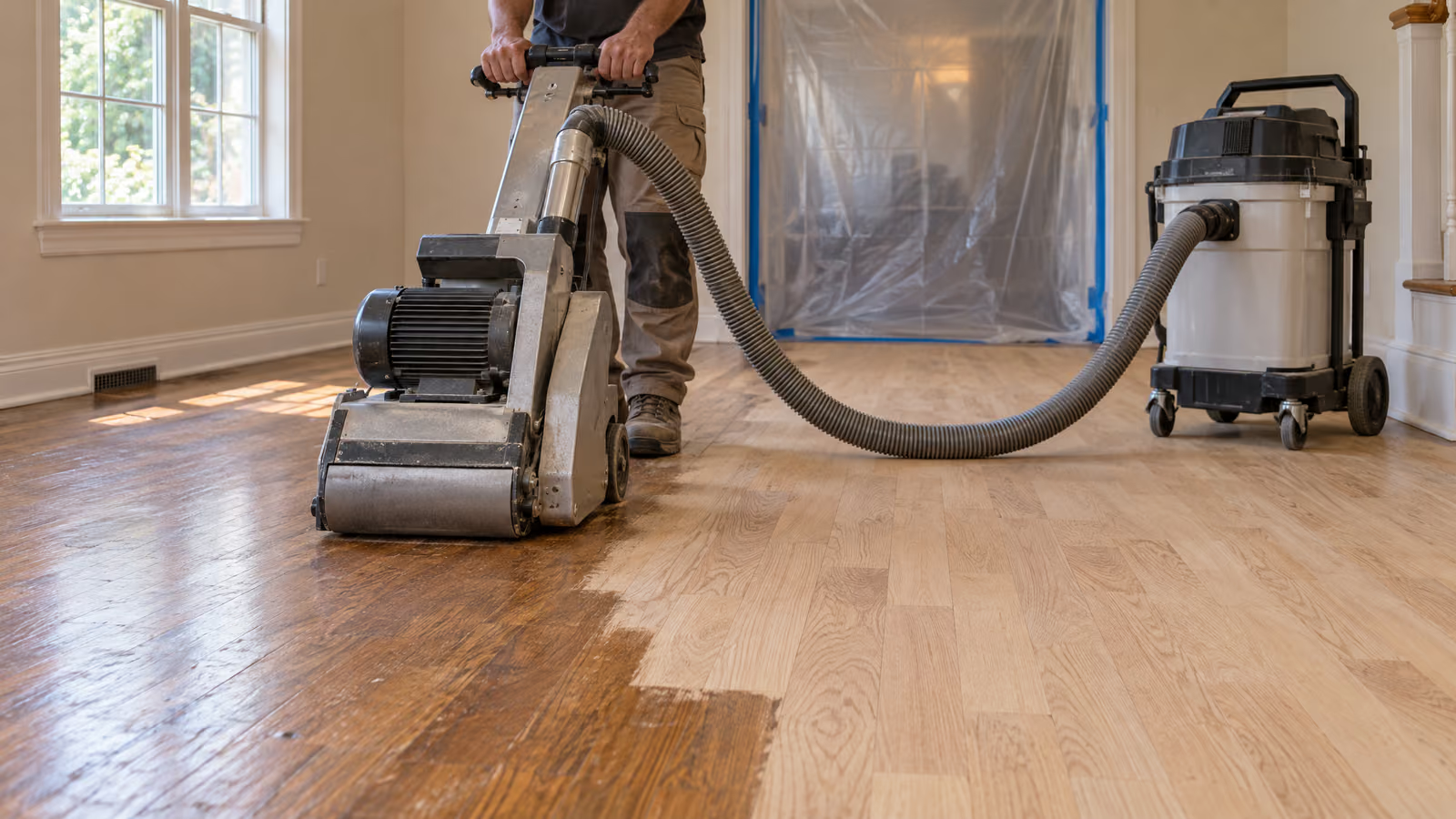
- Sanding: coarse to fine passes, then edges and corners, then a final vacuum.
- Stain (optional): sample tests on your floor, then the chosen colour is applied and left to dry.
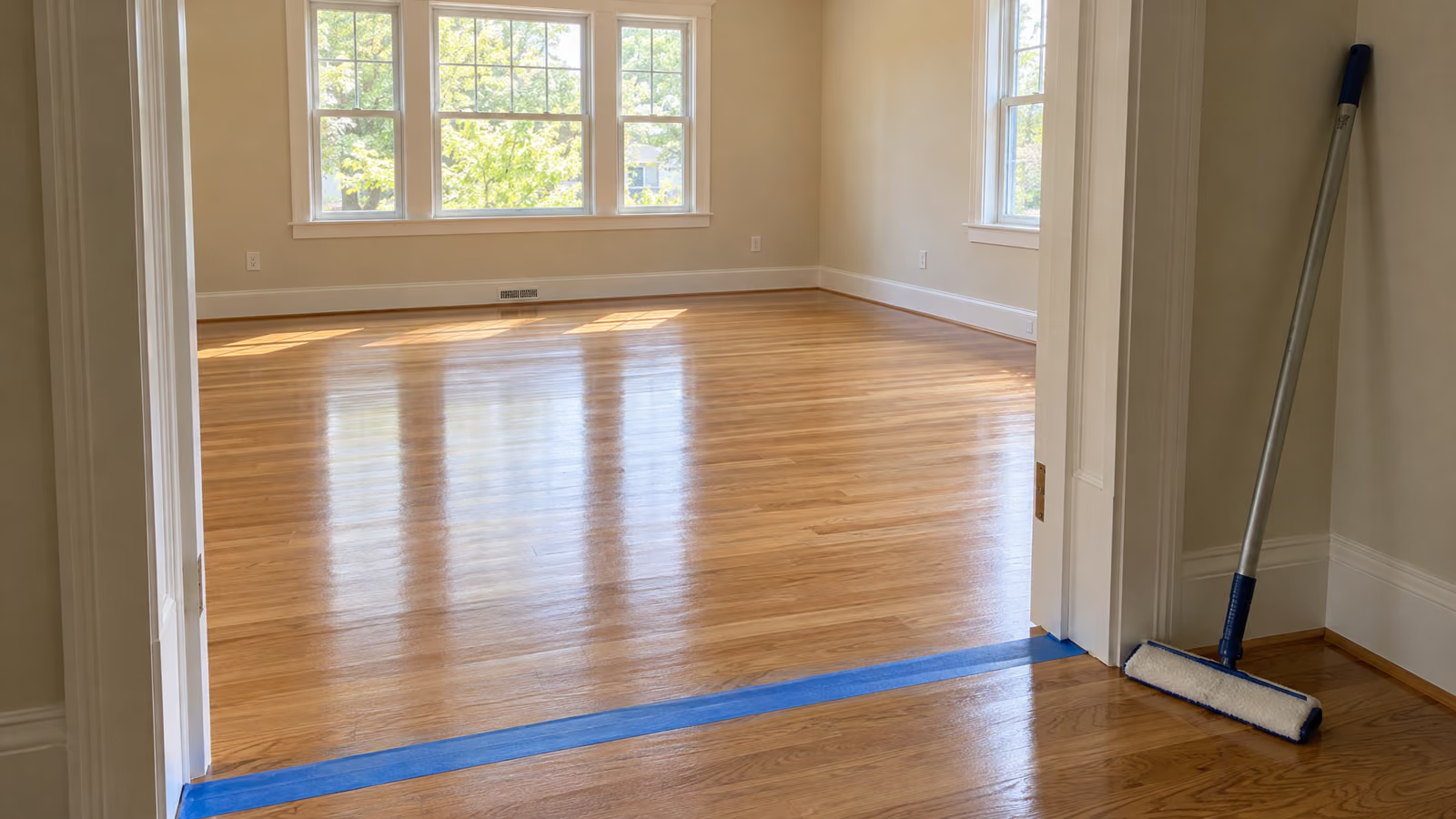
- Sealer and finish coats: each coat dries before the next one goes on.
- Cure: the floor can be walked on gently while the finish keeps hardening.
How long each coat and the full cure take
Drying and curing are not the same thing. A coat is dry when the next coat can go on. It is cured when it reaches full hardness. The Bona Traffic HD data sheet lists a drying time of 2 to 3 hours per coat. It says the finish is about 80% cured after 1 day and fully cured after 3 days.
Those numbers are for that product in normal room conditions. Other finishes, cooler rooms and damp weather can slow things down. We tell you the exact product and its times before we start.
When you can walk, move furniture and put rugs back
The same data sheet says the floor may be walked on after 24 hours, but it can still scuff until it is fully cured. It also says not to put area rugs back until the finish has fully cured. Use socks, not shoes, for the first days.
Lift furniture into place, never drag it, and add felt pads under the legs. For the first week, clean only with a dry microfiber mop. These steps come straight from the manufacturer care notes and help the finish last.
What makes a job take longer
Repairs come first, so loose or water-damaged boards add time. A stain adds a drying step. Stairs are slow because each tread and nosing is detailed by hand; see our hardwood stairs work.
Room conditions matter too. The NWFA advises keeping homes between 60 and 80 degrees Fahrenheit and 30 to 50 percent humidity year-round. Damp Lower Mainland months can slow drying, so we keep the heat and airflow steady.
How long is sanding by itself?
Sanding is usually the shortest part of the job. A large open room sands faster than a home with many small rooms, halls and closets. Floors with old wax, deep stains or heavy wear need more passes.
If you only need a refresh, a screen and recoat skips the full sand and is much faster. Read about it on our restoration and recoating page, or see the full refinishing process.
Planning around your home
Many clients in Vancouver, Burnaby, Richmond and Surrey plan the work for a trip or a long weekend. We can also do one area at a time so part of the home stays usable. Ask for a schedule with your free estimate.
Sources
Questions
Frequently asked questions
Can I stay at home while my floors are refinished?
Often yes, if you can live in the rooms we are not working on. Sanding areas and freshly coated rooms must stay closed. Dust-controlled sanding and water-based finishes keep dust and odour low, which makes staying easier.
How soon can I put furniture back?
Light use is possible after about a day with a fast-curing finish, but the finish is still soft. Wait as long as possible, lift pieces into place and use felt pads. We give you the exact times for the product used on your floor.
Does a stain add time?
Yes. Sample tests and the stain itself need to dry before the first finish coat goes on. It usually adds part of a day or more, depending on the stain and the weather.