Why sanding dust is worth controlling
Sanding a floor turns the top of the wood into fine dust. WorkSafeBC lists sanding among the tasks likely to produce high levels of wood dust. It also names emptying the bag of a dust collector or vacuum as one of those tasks.
Fine dust drifts into vents, cupboards and fabric. Controlling it protects your home and the crew doing the work.
How dust capture works
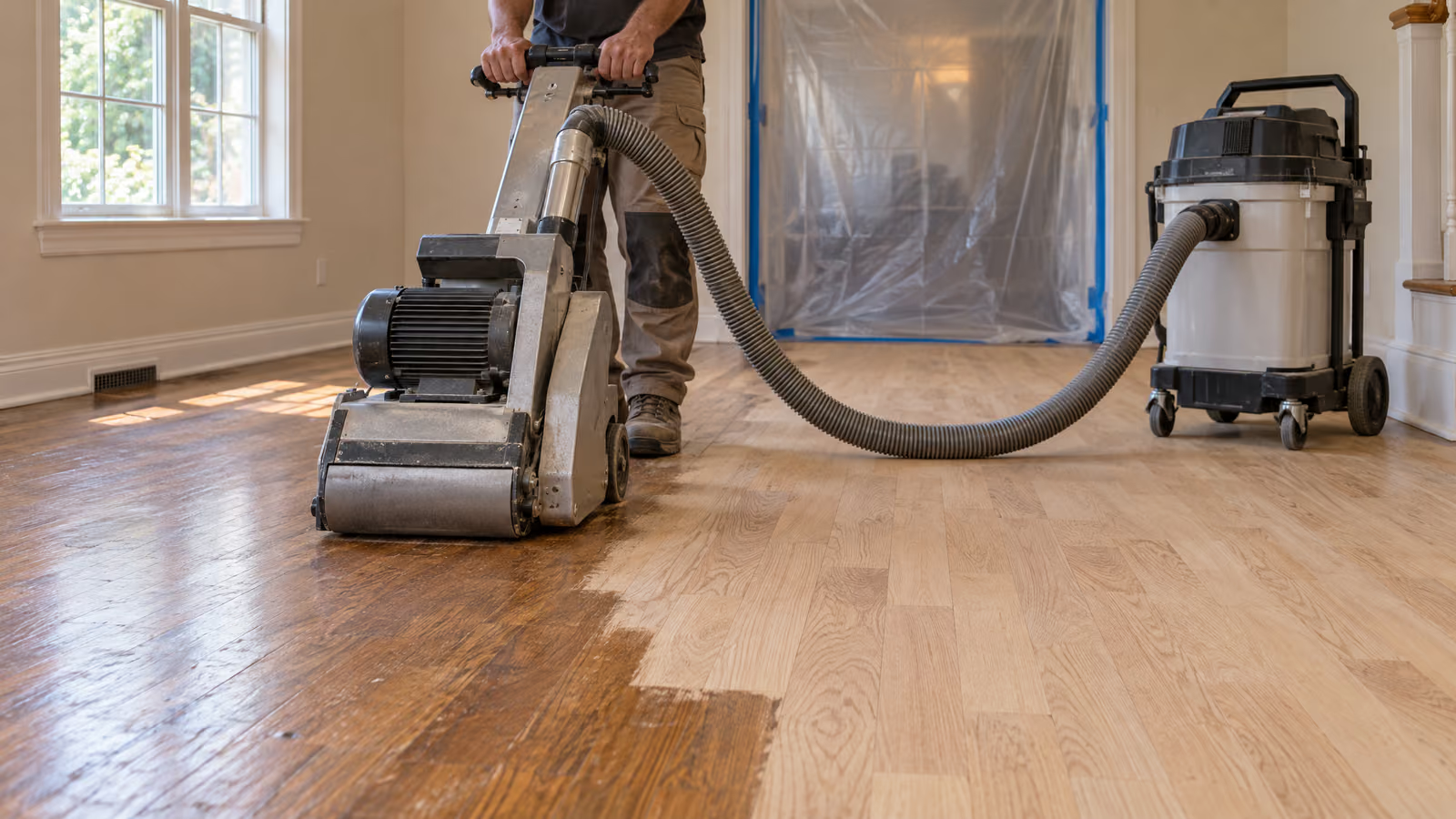
With a dust containment setup, the sanding machines connect straight to a vacuum unit by hose. The dust is pulled in at the sanding head, before it can spread. The vacuum then filters the air in stages.
Bona, a finish and equipment maker, says on its dust-free sanding page that its dust containment systems remove up to 99.8% of dust compared with traditional sanding. That figure is the maker's own claim for its system, and "up to" matters.
Why no sanding job is 100% dust-free
Some dust can still escape, even with good equipment:
- Edges, corners and stairs are sanded with smaller tools that are harder to seal.
- Hand scraping and detail work make dust that a hose cannot reach.
- Filters and bags must be changed, which can release dust.
- Gaps under doors and open vents let fine dust move between rooms.
How we keep your home clean
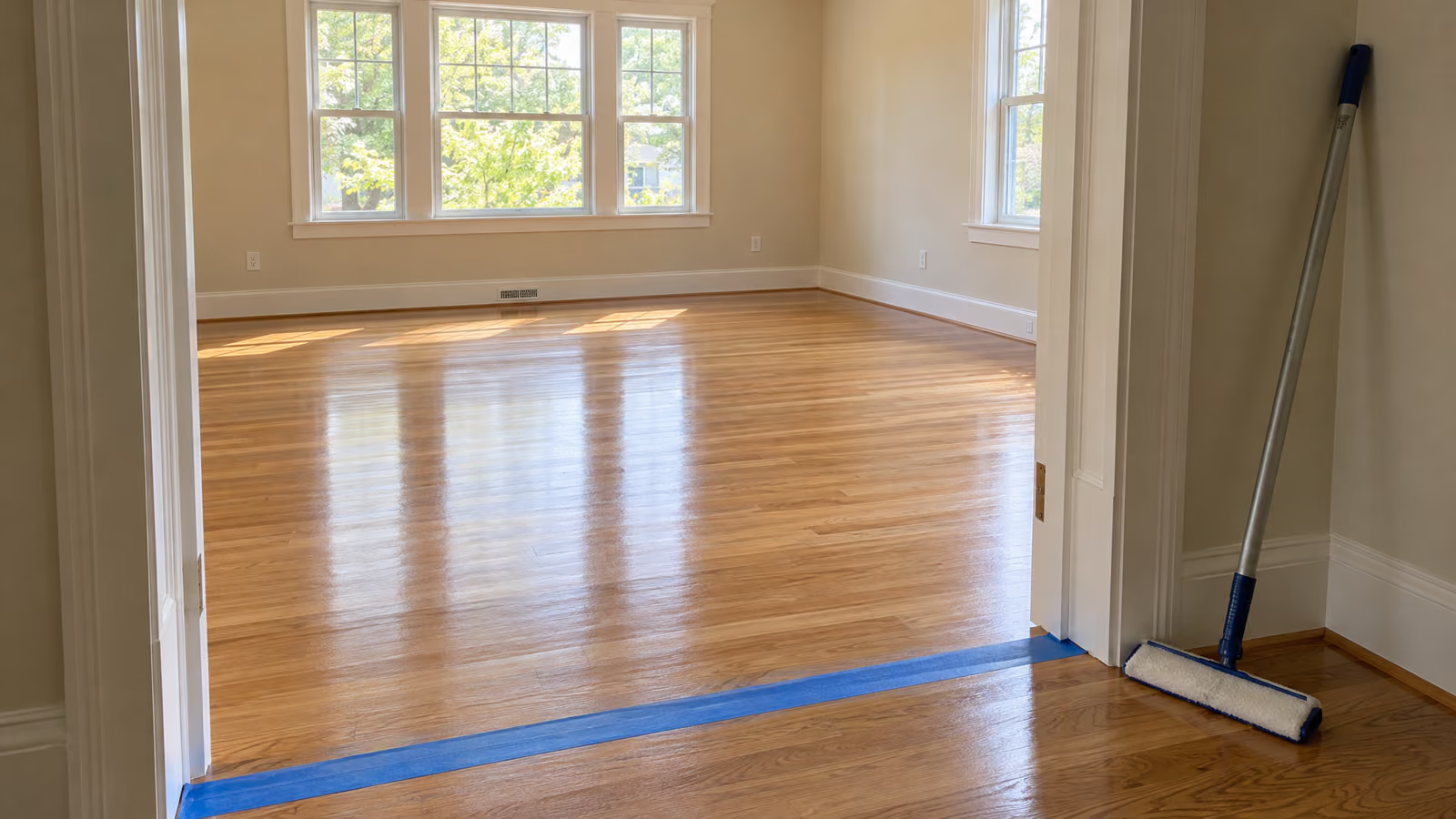
We use dust-controlled sanding, cover doorways and vents, and vacuum between steps. We then apply water-based finishes, which keep the smell low. Clean-up is part of the job, not an extra.
You can help by clearing the rooms, closing off nearby spaces and taking down curtains and art. This is the same prep we ask for on every hardwood floor refinishing and hardwood stairs project.
Is dustless sanding a DIY job?
Rental sanders can cut deep marks into a floor very fast, and most rentals have weak dust collection. A mistake can remove more wood than a pro would in a full job. For worn but sound floors, a screen and recoat may be all you need.
We serve homes in Vancouver, North Vancouver, West Vancouver, Burnaby, Delta, Surrey, Coquitlam and Langley. Request a free estimate to plan your project.
Sources
Questions
Frequently asked questions
Do I need to leave home during dustless sanding?
Not always for the sanding itself, but the rooms being sanded must be empty. Many people stay away during finishing and drying to avoid walking on the floor. We plan the schedule with you.
Is dustless sanding slower?
Not by much. The vacuum runs at the same time as the sander. It can save time later, because there is far less dust to clean before the finish goes on.
Does dustless sanding change the final look?
No. The wood is sanded with the same grit steps. Less dust in the air also means fewer specks settling in the wet finish, which helps the final coat look smooth.