What engineered hardwood is made of
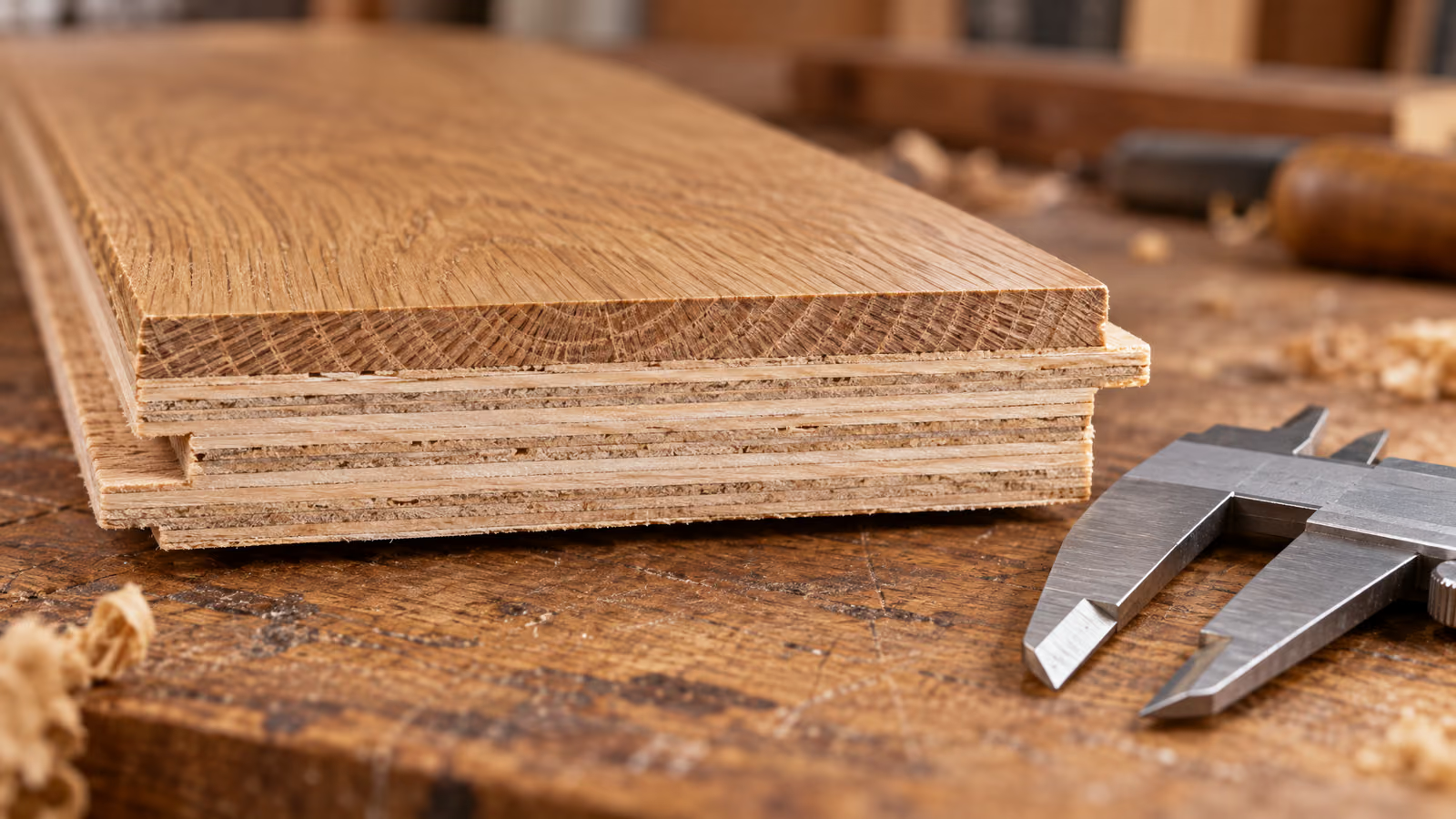
Solid hardwood is one piece of wood from top to bottom. Engineered hardwood is built in layers. A layer of real hardwood sits on top of a stable core, often plywood. The core helps the plank resist movement when humidity changes.
Only the top layer is the wood you see and walk on. That is the only part a sander can touch. Once it is gone, the core shows through and the plank cannot be fixed by sanding. Learn more on our engineered hardwood flooring page.
How thick the wear layer must be
The National Wood Flooring Association runs a Refinishable Program for engineered products. Its minimum wear layer is 3.2 mm for unfinished engineered flooring and 2.5 mm for factory-finished flooring. For sculpted or distressed boards, the 2.5 mm is measured at the lowest point.
The NWFA also says the number of times any floor can be sanded depends on the skill of the contractor, the equipment, the wear layer, and how flat the floor is. A thin layer leaves very little room for error.
How to check your own wear layer
You can often find the answer without lifting a board:
- Lift a floor vent cover and look at the cut edge of the plank. The top band of wood is the wear layer.
- Check the edge at a threshold, stair nosing or transition strip.
- Look for the product name on leftover boxes, then read the maker's spec sheet.
- Ask the builder or the original installer for the product details.
Sand, or screen and recoat?
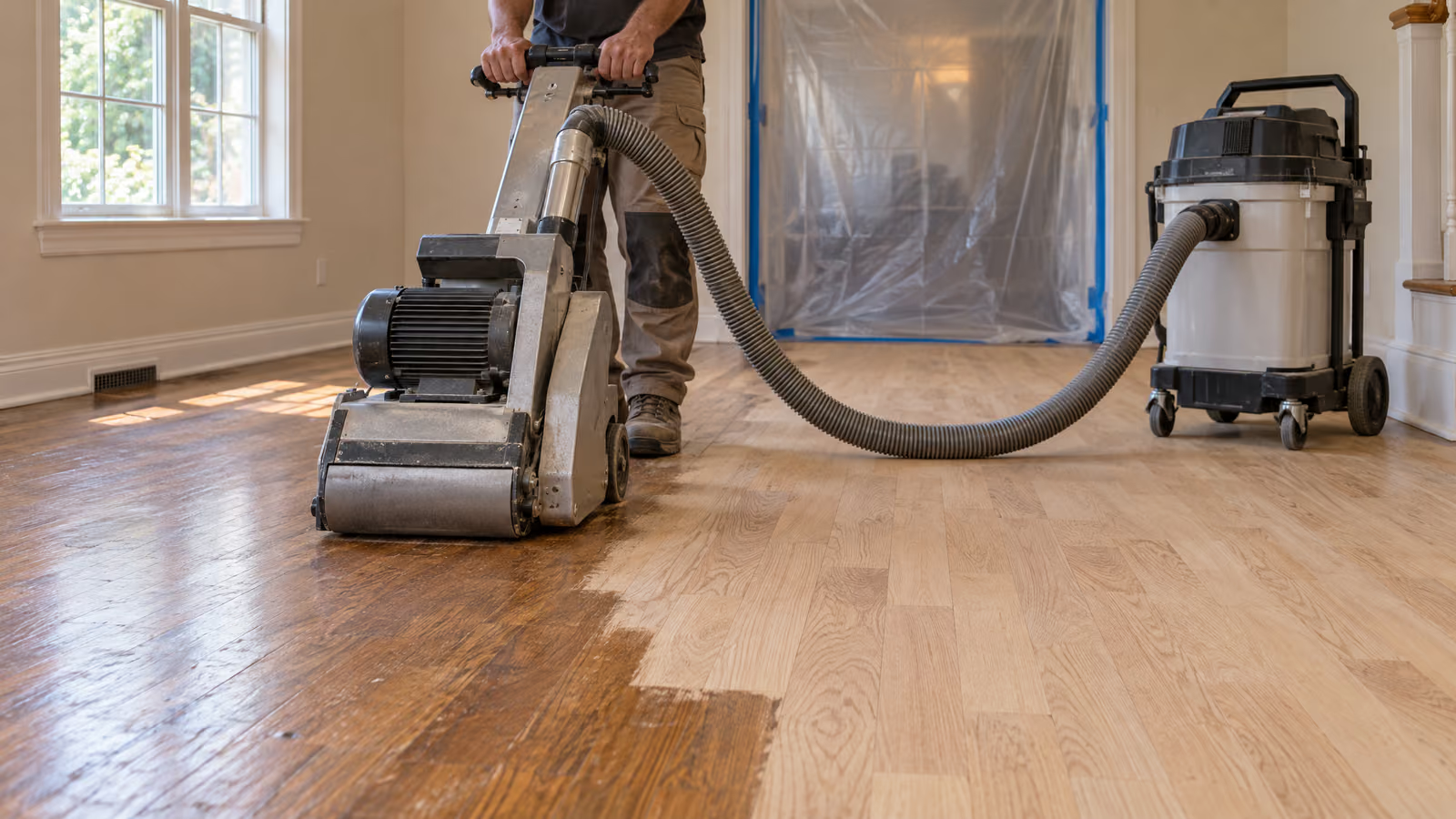
If the wear layer is thick and the damage goes into the wood, a full sand can work. It must be done with care, with fine control at the edges, so the layer is not cut through. See hardwood floor refinishing.
If the layer is thin, or the finish is only dull, a screen and recoat is the safer choice. The NWFA describes this maintenance coat as cleaning the finish, lightly sanding it and adding a fresh coat. It removes no real wood. Our restoration and recoating service covers it.
Buying new engineered flooring? Plan for the future
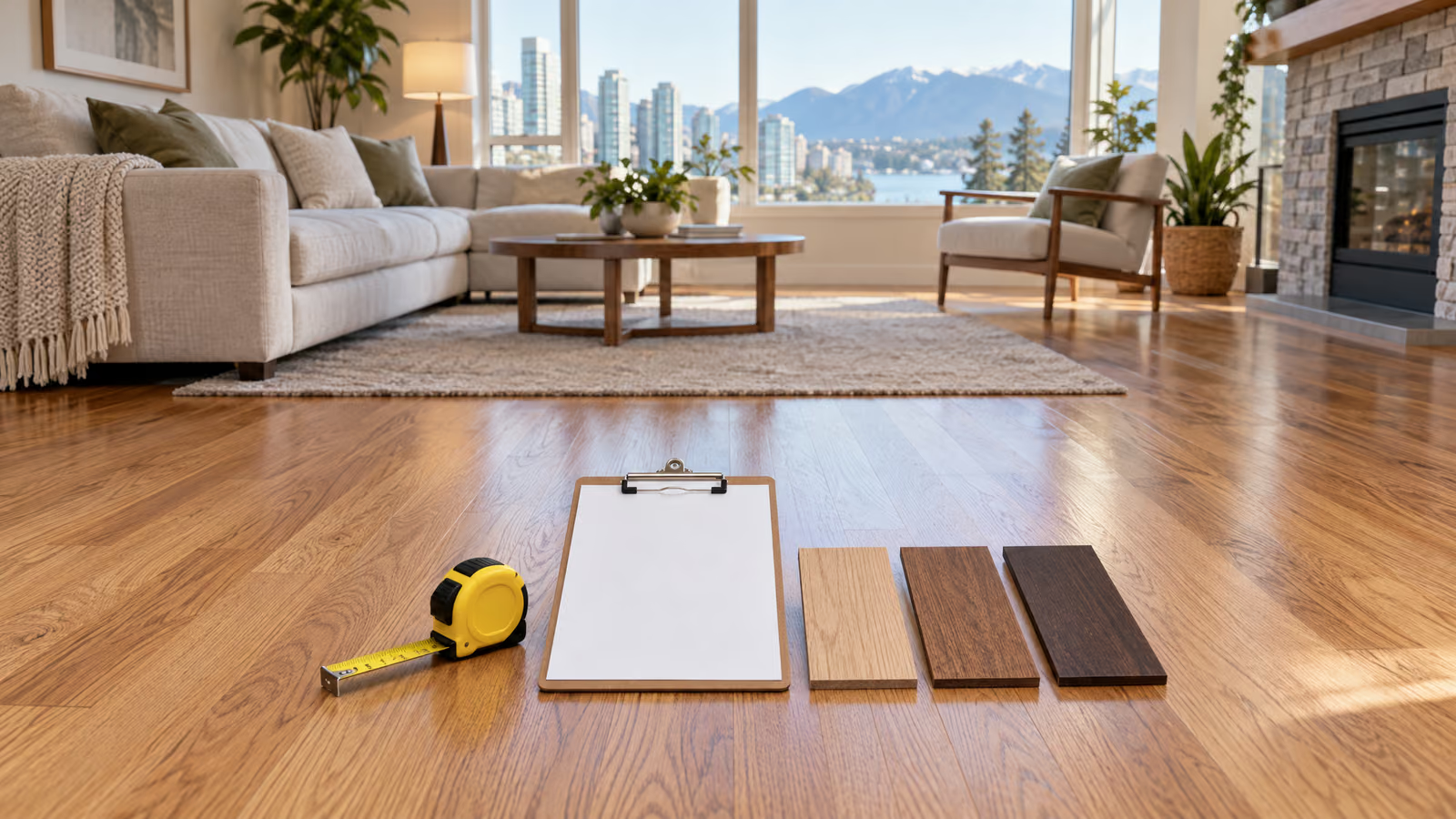
If you are choosing new flooring, ask about the wear layer before you buy. A thicker layer gives you the option to refinish later, instead of replacing the whole floor. Products that meet the NWFA Refinishable standard are one way to compare.
We supply and install engineered and solid hardwood flooring across the Lower Mainland, including Vancouver, North Vancouver, Richmond, Burnaby, Surrey and Langley. We can measure your wear layer during a free estimate visit.
Sources
Questions
Frequently asked questions
How many times can engineered hardwood be refinished?
It depends on the wear layer thickness, the flatness of the floor and the skill of the person sanding. Some engineered floors can be sanded more than once. Others can only take a recoat. We measure the layer before we suggest anything.
What happens if the wear layer is sanded through?
The core material shows through and the plank cannot be fixed by more sanding. That board has to be replaced. This is why careful edge work and an early check matter so much on engineered floors.
Can a thin engineered floor still look better?
Often, yes. A deep clean and a screen and recoat can bring back sheen and hide light scuffs. It will not remove deep scratches or dents, but it adds protection without removing wood.